Top 10 Online Reputation Management Softwares in Australia


Your online reputation is everything. It doesn’t matter if you’re running a dental clinic, a boutique hotel, or a local retail chain, what customers say about you online is often more influential than any advertising campaign could ever be.
Google reviews, social media mentions, and third-party testimonials all shape how potential customers view your brand. The bottom line is that ultimately, this is what they’ll use when choosing you or a competitor.
That’s why online reputation management (ORM) has become essential for Australian businesses. With ORM software, you can monitor reviews, request feedback, respond to customer comments, and maintain your credibility across platforms like Google, Facebook, and industry-specific directories.
In this guide, we’re sharing the top 10 online reputation management software solutions in Australia for 2025. We’ll look at features, support, and local relevance, finding the perfect solution for your business, regardless of your industry or size.
How online reputation management works here in Australia
Before comparing platforms, it always helps to understand what online reputation management (ORM) software actually does. Google reviews influence local search visibility, helping determine which businesses appear in map results for searches like “dentist near me” or “plumber Brisbane.”
Review quantity, consistency, recency and sentiment all matter. A steady flow of positive reviews signals an active, trusted business, while an outdated profile can lose ground to competitors collecting reviews regularly.
Your Google Business Profile is central to this process. It’s where customers see your rating, reviews and key business details before visiting your website.
Most ORM platforms focus on three core functions:
- Monitoring: Tracking reviews and mentions across platforms.
- Generating: Automatically requesting reviews from customers.
- Responding: Managing customer feedback and engaging with reviews.
The strongest platforms combine all three, while others focus on just one area.
The ORM software categories explained
ORM platforms generally fall into four categories:
All-in-one communication and reputation platforms combine review management with features like messaging, payments and web chat. These suit businesses wanting to manage customer communication and reviews in one place.
Enterprise multi-location platforms are designed for franchises and large organisations managing many locations. They provide powerful reporting and oversight but may be unnecessary for smaller businesses.
Public review platforms focus on collecting and displaying customer reviews to build trust and social proof, making them popular with ecommerce and service businesses.
Listing and directory platforms focus on keeping business information accurate across online directories. These are especially valuable for businesses managing multiple locations.
Understanding which problem you need to solve will help narrow down the right platform.
Finding the best ORM software for your business
The best platform depends on your business size, goals and existing systems.
- Number of locations is a key consideration. Single-location businesses usually need simple review management, while larger brands may require enterprise-level tools.
- Review volume also matters. Businesses receiving many reviews need automation and sentiment tracking, while smaller businesses may only need basic review requests.
- Consider how much automation you need. Some platforms can automatically request reviews, send follow-ups and assist with responses, while others provide a simpler monitoring approach.
- Your existing software integrations are important too. Check that the platform connects with your CRM, booking system or point-of-sale software before committing.
- Industry also plays a role. Healthcare and trades often benefit from easy-to-use review tools, ecommerce brands may prioritise public review platforms, and multi-location businesses often need stronger listing management capabilities.
#1 Podium Australia
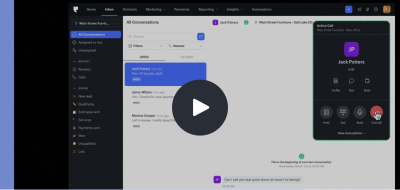
Podium Reputation Management is a comprehensive communication and management platform that helps your business collect and manage reviews, engage customers through messaging, and build trust online. Importantly, all this can be done from one single inbox.
This powerful solution is all about giving you a faster, smarter way to take control of your online reputation, without the heavy lifting. Its AI-powered platform helps you double your Google reviews, improve your local SEO visibility, and convert more leads by automating personalised review invites via SMS.
The AI Reputation Specialist feature means responses are crafted intelligently and instantly. This is a surefire way to boost your credibility on platforms like Google and Facebook. From ranking higher on Google or becoming the obvious choice in your industry, Podium is the way to get your business noticed and chosen.
Key Features
- Real-time review monitoring across Google, Facebook, and industry sites.
- SMS and email-based review requests with automation options.
- AI-powered sentiment analysis and smart response suggestions.
- Integration with Google Business Profile for local SEO optimisation.
- Unified inbox combining text, web chat, and review responses.
What Makes It Great for Australian Businesses
Podium is made for the Australian business landscape thanks to local data compliance and Australian-based support. It’s especially effective if you’re operating in industries like healthcare, legal, and trades, where customer experience and reputation are critical.
Pros: Expect easy onboarding, localised support, and a range of powerful review automation tools.
Cons: Podium doesn’t offer a free plan, but the entry-level tier promises exceptional value that will take your business up a gear in customer management.
Best For: Australian small to mid-sized businesses that want to increase visibility, collect more reviews, and manage customer reputation better than ever before.
#2 Birdeye
Birdeye is a multi-location reputation management platform that gives you the power to generate reviews, monitor brand sentiment, and respond to any feedback across your channels.
Key Features
- Centralised review monitoring and response.
- AI-driven sentiment tracking.
- Customisable review request campaigns.
- Integration with over 3,000 CRMs and apps.
- Chat and web messaging tools.
What Makes It Great for Australian Businesses
Birdeye supports businesses operating in Australia with features that cater to your local SEO needs and Google review collection. It’s also completely scalable, making it ideal for franchises or businesses working in more than one location.
The Good and the Bad
Pros: Wide range of integrations, strong multi-location features.
Cons: Interface can be overwhelming for single-location or smaller teams.
Best For: Franchises and growing businesses needing enterprise-level ORM and marketing automation.
#3 Reputation.com
Reputation.com is an enterprise-grade platform that’s all about managing online presence, customer experience, and brand perception across large networks.
Key Features
- Automated review collection.
- Location-specific analytics and dashboards.
- Sentiment analysis.
- SEO and directory listing management.
- Social media response tools.
What Makes It Great for Australian Businesses
While headquartered overseas, Reputation.com brings full support for Australian businesses. It’s built to be scalable, centering on the healthcare, education, and automotive sectors.
The Good and the Bad
Pros: Excellent for managing hundreds of locations and large volumes of review.
Cons: May be too feature-heavy for smaller businesses.
Best For: Enterprises with multiple locations or those in regulated industries such as healthcare or education.
#4 Trustpilot
Chances are you’ve heard of Trustpilot. This is a global review platform that helps businesses collect and showcase verified customer feedback on a site that’s both open and consumer-facing.
Key Features
- Public-facing review profiles.
- Email and website-integrated review invitations.
- TrustBox widgets for on-site review display.
- SEO-enhanced review content.
- Review flagging and response.
What Makes It Great for Australian Businesses
Trustpilot is recognised globally and it’s becoming increasingly popular in Australia. It really comes into its own for eCommerce and online service providers looking to boost credibility and improve conversion.
The Good and the Bad
Pros: Highly visible reviews that make it great for SEO and trust-building.
Cons: Limited control over review publishing, but lacks local integrations.
Best For: Online retailers and digital service businesses that want transparent, public-facing reviews.
#5 ReviewTrackers
ReviewTrackers is a reputation monitoring platform with a clear focus on helping businesses improve customer experience by harnessing in-depth review analytics.
Key Features
- Centralised review feed and reporting.
- Custom review request templates.
- Sentiment analysis and trend spotting.
- Google and Facebook integration.
- Role-based access and team workflows.
What Makes It Great for Australian Businesses
Trustpilot is recognised globally and it’s becoming increasingly popular in Australia. It really comes into its own for eCommerce and online service providers looking to boost credibility and improve conversion.
While based in the US, ReviewTrackers supports Australian businesses with international review site monitoring and industry-specific reporting features.
The Good and the Bad
Pros: Strong analytics tools that make for easy review management for teams.
Cons: Less robust on the messaging and engagement side.
Best For: Businesses that need something more in-depth, with detailed review analysis and team-friendly dashboards.
#6 Yext
Yext is a digital knowledge management platform with reputation management that’s best suited to local search. Its capabilities focus on accuracy and visibility across listings as well as reviews.
Key Features
- Review monitoring and generation.
- Listing management across 100+ directories.
- Natural language processing for sentiment.
- Automated FAQ and review response tools.
- Analytics dashboard with SEO impact tracking.
Why It’s Great for Australian Businesses
Yext integrates with Australian directories and supports brands looking to improve visibility across Google, Bing, Apple Maps, and more. It’s particularly effective for companies managing large directory footprints.
Pros and Cons
Pros: Excellent for search presence, integrates well with local listings.
Cons: More focused on visibility than engagement; can be complex to configure.
Best For
Multi-location businesses wanting to boost local SEO and control online listings.
#7 LocalClarity
LocalClarity is a review and listing management platform designed for franchises, agencies, and brands that deal with multiple local business profiles.
Key Features
- Review aggregation and bulk response tools.
- Google Q&A management.
- Location-based performance metrics.
- Local SEO performance tracking.
- White-label reporting options.
What Makes It Great for Australian Businesses
LocalClarity supports businesses in Australia and integrates well with Google Business Profiles. This important function makes it a good suit for industries like hospitality, retail, and automotive.
The Good and the Bad
Pros: Cost-effective at scale, solid for multi-location brands.
Cons: Interface may be too technical for smaller or non-digital teams.
Best For: Agencies, franchises, or businesses managing multiple store locations.
#8 Swell
Swell is a modern review generation and messaging platform that’s been designed for service-based industries and appointment-driven businesses.
Key Features
- Automated SMS and email review requests.
- Customer satisfaction surveys.
- Review funneling to Google, Facebook, and Healthgrades.
- Simple dashboard with daily alerts.
- Patient/client intake form integration.
What Makes It Great for Australian Businesses
Swell is based in the US, although it’s used by practices and providers in Australia too. It supports industries like dental, allied health, and wellness services.
Pros: Easy to use, particularly in healthcare settings.
Cons: There’s limited integration with Australian-specific platforms.
Best For: Clinics, dental practices, and service providers that need patient feedback automation.
#9 NiceJob
NiceJob is a reputation management and social proof platform that helps businesses get more reviews. It also automatically publishes them across their website and social channels to keep things nice and easy.
Key Features
- One-click review requests.
- Automated review sharing to social media.
- Website integration and widgets.
- Simple reputation scoring system.
- Referral and testimonial tools.
What Makes It Great for Australian Businesses
NiceJob’s user-friendly interface makes it a good fit for trades, home services, and sole operators across Australia. You’ll get direct support for Google as well as Facebook reviews.
The Good and the Bad
Pros: Great for time-poor business owners, social sharing included.
Cons: Fewer advanced analytics or integrations for larger teams.
Best For: Solo operators and trades businesses that want an easy way to boost reviews.
#10 Broadly
Broadly is an all-in-one customer experience platform with features for reviews, messaging, payments, and website chat.
Key Features
- Review request automation via SMS and email.
- Mobile-first inbox for customer communication.
- Google and Facebook integrations.
- Website chat widget.
- Payments and invoicing functionality.
Why It’s Great for Australian Businesses
Broadly supports Australian clients and works well for home services and small businesses looking to combine reviews with basic CRM and invoicing tools.
Pros and Cons
Pros: Combines reputation, messaging, and payments in one platform
Cons: May lack depth for businesses needing advanced analytics
Best For : Small businesses looking for simple, mobile-friendly communication and reputation tools.
Manage Your Business Reputation Like a Pro
Your online reputation matters more than ever. The right software makes managing it easier, smarter, and far more effective in the long run.
Which ORM tool is the right fit for your business type?
- Healthcare: Clinics, dental practices, and allied health providers benefit from platforms with strong automation and simple patient facing workflows. Podium and Swell both suit this segment well, with Swell’s intake form integration a particular advantage for medical settings.
- Trades and home services: Solo operators and small teams want something mobile first and low effort to run day to day. NiceJob, Broadly, and Podium all fit this profile, prioritising ease of use over deep analytics.
- Retail and ecommerce: Businesses selling online benefit most from public facing, trust building review displays. Trustpilot leads here, particularly for brands wanting visible, SEO friendly reviews alongside conversion focused review widgets.
- Multi location franchises: Managing consistency across many sites calls for centralised dashboards and location level reporting. Birdeye and LocalClarity are both built specifically for this kind of scale.
- Enterprise brands: Large organisations, particularly in regulated industries like healthcare or education, tend to need the depth of Reputation.com, which handles complex, high volume reputation management across large networks.
As with most software decisions, the best tool is the one that matches your actual operating reality, location count, team size, and industry, rather than whichever platform ranks first on a generic comparison list.
Among all the tools available in 2025, Podium Australia is the true winner. It combines smart automation, local relevance, and ease of use to make a solution that’s both powerful yet usable. It’s the clear choice for Australian businesses that really want to stand out from the crowd.
Book a demo and see for yourself.