Top 10 Text Messaging Software in Australia (2025 Guide)


In 2025, communication is just one piece that makes up SMS. It now acts as a core channel for marketing, sales, and service for businesses all across Australia. When you consider open rates often exceed 90%, it’s not hard to see why text messaging has proven itself to be one of the most effective ways to connect with customers quickly, personally, and at scale.
The rise of SMS marketing has also led to a boom in text messaging software and there’re now local and global providers competing in the Australian market. The problem is there are so many options out there; so what do you choose? And, which one truly meets the needs of local businesses?
When factors like compliance, support, and integrations come into play, you need to be sure that you’re investing in the right solutions. That’s why we’ve put together this guide: a comprehensive breakdown of the top 10 text messaging software options in Australia for 2025. You could be a small business, a national chain, or company operating somewhere in between. It doesn’t matter, this list is all you need to make the right decision, first time around.
How SMS Is Used by Australian Businesses in 2025
SMS is no longer a single-purpose channel in Australia. In 2025, it’s critical across all operations, marketing, and the customer experience. This is particularly true when it comes to businesses that need speed, visibility, and high-intent engagement. Australian businesses are using SMS in the following ways across industries:
- Trades and home services rely on SMS for job confirmations, on-the-way notifications, missed call follow-ups, and review requests after completed work. Speed and reliability matter here, especially for emergency call-outs.
- Healthcare and allied health providers use SMS primarily for appointment reminders, follow-ups, cancellations, and patient communication. Messaging must remain compliant and non-promotional while still being timely and clear.
- Automotive businesses use SMS for service reminders, booking confirmations, payment links, and post-service feedback. Two-way messaging is increasingly important for managing enquiries without tying up phone lines.
- Education and training providers use SMS to reduce no-shows, confirm enrolments, share schedule changes, and support student communications where email is often ignored.
- Ecommerce and retail businesses rely on SMS for order confirmations, delivery updates, abandoned cart reminders, promotions, and loyalty engagement.
It’s important to distinguish between transactional SMS and marketing SMS across all industries. Transactional messages support an existing customer relationship such as reminders or updates. Marketing SMS promotes offers, campaigns, or reactivation. Remember: Each one will come with different compliance expectations.
Australian businesses are also moving away from broadcast-only messaging. Two-way SMS now plays a central role in customer service, allowing customers to reply, ask questions, and resolve issues in real time.
Australian SMS Compliance and Regulations Explained
SMS compliance in Australia is governed primarily by the Spam Act 2003, enforced by the Australian Communications and Media Authority (ACMA). Any business using SMS must understand these rules before selecting a platform. At a high level, compliant SMS messaging in Australia requires:
Consent: Businesses must have express or inferred consent before sending marketing messages. Transactional messages still require a legitimate customer relationship.
Clear sender identification: Every message must clearly identify the business sending it. Brand names, not anonymous shortcodes, are expected.
Unsubscribe functionality: Marketing SMS must include a functional opt-out mechanism, such as “Reply STOP to unsubscribe”, and it must be honoured immediately.
Purpose clarity: Messages must align with the reason consent was given. Promotional messaging disguised as service updates is a common compliance failure.
ACMA enforcement risk: ACMA actively enforces SMS compliance. Penalties can be substantial, even for small businesses.
Data handling considerations: Businesses should understand where customer data is stored and how it is managed, particularly when using overseas providers.
How We Selected These SMS Platforms
To make sure this guide reflects real buyer needs rather than marketing claims, each SMS platform was evaluated using consistent criteria relevant to Australian businesses. Our evaluation focused on:
- Australian compliance readiness
- Support for two-way messaging versus one-way SMS
- Automation and workflow capability
- CRM, booking, and payments integrations
- Availability of Australian-based support
- Balance between ease of use and developer flexibility
- Suitability for SMEs versus enterprise teams
- Pricing transparency and cost structure clarity
This is how we made sure our rankings are practical, fair, and relevant to local business needs.
#1 Podium Australia
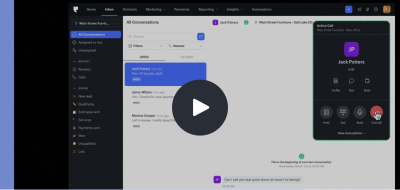
Podium is an all-in-one communication and reputation platform that’s all about helping Australian businesses manage customer interactions across SMS, webchat, and other key channels. When it comes to hitting the mark of the needs of Australian businesses – think compliance, support, automation, and customer engagement – Podium Text Marketing is the best option.
Unlike traditional employee software solutions that rely on rigid bots and limited channels, Podium’s AI Employee delivers natural, goal-focused conversations across SMS, Facebook, and your website; all from one inbox. While others give robotic replies, Podium uses contextual data and image recognition to personalise every interaction. It responds, understands, adapts, and helps drive real outcomes for your business.
Key Features: Podium offers powerful two-way text messaging, automated review requests, appointment reminders, webchat, and even payment collection via SMS. All communications feed directly into one single unified inbox, so that managing conversations is always quick and easy.
Why It’s Great for Australian Businesses: Podium is built with local businesses in mind. It complies with Australian data privacy laws, offers AU-based customer support, and integrates with many of the most popular Australian platforms. Whether you’re in healthcare, retail, automotive, or home services, Podium makes it simple to connect with customers and convert leads, all while remaining compliant.
The Good and the Bad
Pros: Podium is fast to implement, easy to use, and comes with exceptional local support. It also helps businesses collect and manage online reviews, which is something very few other SMS platforms bring to the table.
Cons: Podium doesn’t offer a free plan, but the entry-level tier delivers far more value that will take your business up a gear in customer management.
Best For: Local Australian businesses that want to streamline communication, grow through customer feedback, and create a better overall customer experience.
Explore Podium Text Marketing to see how it can transform your customer communications.
#2 SMSGlobal
SMSGlobal is an established player when it comes to the SMS industry. It’s rooted in creating a reliable messaging infrastructure with tools that are tailored to bulk communication.
Key Features: It provides bulk SMS services, an intuitive online dashboard, API access, and message scheduling. Delivery tracking and reporting tools help monitor campaign performance.
Why It’s Great for Australian Businesses: With headquarter that’s based in Melbourne, SMSGlobal has a strong local presence and infrastructure. It’s a great option for any businesses that are looking to prioritise mass communication over two-way engagement.
The Good and the Bad
Pros: Local infrastructure, no setup fee, and dependable message delivery make SMSGlobal a solid option for bulk senders.
Cons: The interface can feel dated, and it lacks more advanced features like automation, review management, or integrated payments.
Best For: Perfect for larger businesses and enterprise-level teams that need bulk SMS capability and delivery reliability.
#3 MessageMedia
MessageMedia delivers SMS marketing and customer communication tools with a clear focus on keeping the platform simple and easy-to-use. Here, automation and integration play a key role.
Key Features: Businesses have the power to send SMS and MMS, create automated workflows, and integrate messaging with their existing CRMs like HubSpot and Salesforce.
Why It’s Great for Australian Businesses: As a Melbourne-founded company, MessageMedia knows the regulatory and operational needs of local businesses inside out. That’s part of the reason it’s trusted by such a wide range of industries, from ecommerce to finance.
The Good and the Bad
Pros: Strong Australian support, easy CRM integrations, and proven track record across multiple sectors.
Cons: Lower-tier plans have SMS volume limits, and advanced automation may require more expensive plans.
Best For: Mid-size businesses looking to integrate SMS into broader marketing and CRM workflows.
#4 Burst SMS
Burst SMS is a cloud-based SMS marketing platform that’s packed full of features for campaign execution, customer engagement, and message tracking.
Key Features: The platform offers SMS automation, click tracking, list management, and an intuitive campaign builder. It also boasts API support for developers.
Why It’s Great for Australian Businesses: This platform has offices based in Sydney and they provide fast, reliable delivery across Australian carriers. It’s especially useful for businesses running frequent marketing or promotional campaigns.
The Good and the Bad
Pros: Local support, powerful campaign tools, and flexible API options.
Cons: May not be ideal for very small businesses or teams looking for hands-off automation or all-in-one solutions.
Best For: Marketing teams and agencies that run regular SMS campaigns and need deeper analytics.
#5 Twilio (AU Compatible)
Twilio is a global communications API provider that covers SMS, voice, email, and more – a great solution for developers and enterprises alike.
Key Features: Twilio’s programmable SMS API allows businesses to build custom communication workflows. It also provides comprehensive analytics and carrier routing options.
Why It’s Great for Australian Businesses: Twilio supports reliable SMS delivery across Australia and is a top choice if you have an in-house dev team. However, due to its complexity it’s probably best avoided if you’re a non-technical user.
The Good and the Bad
Pros: Highly scalable, flexible APIs, and global infrastructure.
Cons: Requires technical setup, and lacks a user-friendly interface for non-dev users.
Best For: Large businesses and software teams building custom messaging systems.
#6 ClickSend
ClickSend is a multi-channel communication platform that lets businesses send SMS, email, voice messages, and even direct mail. Like so many modern-day customer contact solutions, it aims to keep it simple by using one single dashboard.
Key Features: Features include SMS and transactional messaging, email-to-SMS functionality, and real-time delivery tracking. You will enjoy a range of integration options and developer-friendly APIs.
Why It’s Great for Australian Businesses: ClickSend is based in Perth, which gives it a strong local advantage if you’re based here. Its multi-channel approach is a bonus for businesses that want more than just SMS.
The Good and the Bad
Pros: Affordable, versatile, and locally supported.
Cons: The platform can feel less modern than some competitors, and lacks advanced automation features.
Best For: Businesses seeking affordable multi-channel communication tools.
#7 SimpleTexting
SimpleTexting is a US-based platform with a clear focus on making SMS marketing easy and accessible for small businesses.
Key Features: With SimpleTexting, users are able to send mass texts, schedule campaigns, set up autoresponders, and manage contact lists. In terms of user experience and simplicity, SimpleTexting is up there with the best.
Why It’s Great for Australian Businesses: While it doesn’t have local infrastructure, it’s an appealing entry point for new users due to its clean interface and transparent pricing.
The Good and the Bad
Pros: Easy to use, beginner-friendly, and offers straightforward pricing.
Cons: Lacks Australian support and may require manual steps to ensure local compliance.
Best For: Small businesses that want a quick, no-fuss way to start using SMS marketing.
#8 TextMagic
TextMagic is a simple SMS tool designed to help small to mid-size businesses access quick but reliable messaging services.
Key Features: This SMS solution does it all and includes a web interface, email-to-SMS, contact import, message tracking, and a mobile app.
Why It’s Great for Australian Businesses: TextMagic supports messaging to Australian numbers and is a good option for occasional or low-volume senders.
The Good and the Bad
Pros: No subscription required, fast setup, and good for one-off messages.
Cons: No local support and lacks advanced automation or integrations.
Best For: Freelancers or small businesses with occasional SMS needs.
#9 Plivo
Plivo provides enterprise-grade APIs for voice and SMS, catering to businesses that want to build and scale their own communications infrastructure.
Key Features: Its SMS API offers global coverage, carrier insights, and scalable delivery with detailed reporting.
Why It’s Great for Australian Businesses: Plivo supports message delivery to Australia and is suited for tech-forward organisations that need complete flexibility.
The Good and the Bad
Pros: Reliable, developer-friendly, and scalable.
Cons: Requires technical resources and lacks user-friendly dashboard features.
Best For: Large businesses or development teams building custom communication workflows.
#10 Vonage
Vonage boasts communication APIs across voice, SMS, video, and authentication, supporting businesses worldwide.
Key Features: Its SMS services include two-way messaging, conversation tracking, and global delivery backed by compliance tools.
Why It’s Great for Australian Businesses: Vonage can deliver SMS in Australia that’s reliable and secure. It really thrives when used for enterprises with global operations and in-house development teams.
The Good and the Bad
Pros: Enterprise-ready, secure, and highly scalable.
Cons: Not beginner-friendly and lacks AU-based support.
Best For: Global enterprises that need full control over communications.
SMS Software Comparison Snapshot
This snapshot is designed to help readers quickly compare platforms without reading every full review.
Podium stands out for two-way messaging, automation, CRM integration, payments via SMS, and strong Australian compliance support. It suits local service businesses and SMEs.
SMSGlobal, MessageMedia, and Burst SMS perform well for bulk and campaign-driven messaging, with varying automation depth.
Twilio, Plivo, and Vonage are best suited to enterprises or development teams building custom messaging systems.
ClickSend, SimpleTexting, and TextMagic are simpler entry points, but with limitations around automation, local support, or compliance tooling.
SMS vs Email vs WhatsApp for Australian Businesses
Each communication channel plays a different role here in Australia. SMS offers the highest open rates and fastest response times. It also works best for urgent, time-sensitive, or high-intent communication.
Email is better suited to long-form communication, receipts, policies, and detailed content, however it’s slower and easier to ignore. WhatsApp enables conversational messaging but has different consent expectations and adoption patterns in Australia to make it it more niche. For most Australian businesses, SMS and email work best together rather than as replacements.
Common SMS Mistakes Australian Businesses Make
Many SMS strategies fail not because businesses lack intent, but because the tools and processes behind them are not suited to how SMS actually works in Australia.
One of the most common mistakes is choosing bulk-only SMS platforms when customers expect to reply. One-way messaging limits conversation, increases missed opportunities, and pushes customers back to phone or email when they are already engaged by text.
Another frequent issue is ignoring unsubscribe and consent requirements. Failing to include a clear opt-out or continuing to message customers after they have unsubscribed creates compliance risk and damages trust. Under Australian regulations, this can also lead to enforcement action.
Some businesses also fall into the trap of over-messaging. Sending too many promotions or reminders in a short period quickly leads to opt-outs. SMS works best when messages are timely, relevant, and tied to a clear customer action.
A lack of system integration is another major barrier. When SMS tools are not connected to CRMs, booking systems, or payment workflows, teams lose context. This results in duplicated messages, missed follow-ups, and inconsistent customer experiences.
Finally, many businesses treat SMS like email. Long messages, generic language, and delayed responses undermine the immediacy that makes SMS effective. Text messaging is a real-time channel. Customers expect short, clear communication and fast replies.
Don’t Waste Time With the Wrong SMS Solution
Every platform on this list brings something valuable, but it’s Podium that is the true winner here.
Yes it’s a messaging tool, but it’s also a complete communication platform with the power to help local businesses build stronger relationships, improve their reputation, and win more customers.