Top 10 VoIP Phones for Businesses in Australia (2025 Edition)


VoIP phone systems are now a vital part of Australian business communications. Why? They bring cost savings, flexibility, and advanced features that traditional phone lines simply can’t match. As more organisations shift to hybrid work models and cloud-based solutions, the demand for reliable, easy-to-use VoIP systems is stronger than ever.
Some of the main functions to look out for from your VoIP system include optimisation for the National Broadband Network (NBN), compliance with local privacy laws, and support that’s tailored to where in the world your business operates. But with so many features and functions, how do you know what you need?
This guide ranks the top 10 VoIP phone solutions available in Australia for 2025. We’ll cover everything to find the best fit for your specific business type and industry, so you can be sure that when you upgrade your VoIP phone system, you’re doing it right.
How VoIP Works for Australian Businesses
Before comparing providers, it’s always good to have an understanding of what you’re actually buying. “VoIP” gets used as a catch-all term, but there are a few different technologies involved, and they don’t all behave the same way.
VoIP vs Hosted PBX vs SIP Trunking (in plain English)
- VoIP (Voice over Internet Protocol) simply means your calls travel over the internet instead of copper phone lines.
- Hosted PBX is a full cloud phone system. The provider runs the phone exchange in their data centre. You just log in and start calling. Most modern small business systems fall into this category.
- SIP trunking replaces traditional phone lines but keeps your on-site phone system. Larger companies often use this when they already have office hardware they want to retain.
If you want minimal setup and easy management, hosted PBX is usually the simplest option. If you already run a private phone server, SIP trunking may make more sense.
Your NBN Connection Actually Matters
Not all internet connections handle voice traffic equally. This is one of the biggest causes of “bad VoIP” experiences in Australia.
- FTTP (Fibre to the Premises): Best call quality and stability
- FTTN (Fibre to the Node): Usually fine, but sensitive to peak-time congestion
- Fixed Wireless: Can work, but latency spikes may affect calls
- 5G backup: Excellent as a failover connection during outages
Why QoS (Quality of Service) Is Important
Your router can prioritise traffic. Without this, a large file upload or cloud backup can disrupt calls. Quality of Service (QoS) settings ensure phone calls get priority over general internet traffic. For busy offices, this single setting often makes the biggest difference to call clarity.
Local Data Hosting and Australian Support
VoIP systems store call records, voicemails, and sometimes transcripts. Where that data lives matters. Australian-hosted platforms typically reduce latency, simplify compliance and make for faster troubleshooting. Local support also matters when outages occur during business hours.
Softphones, Desk Phones, and Mobile Apps
You don’t have to choose just one device anymore. The truth is that many businesses now use a mix depending on role.
- Desk phones: Reliable and familiar for reception and front-of-house staff
- Softphones (computer apps): Ideal for office teams and call handling
- Mobile apps: Essential for tradies, sales reps, and remote staff
How to Choose the Right VoIP Phone System
With dozens of providers available, the right VoIP system depends less on brand and more on how your business operates day to day. The goal is to match the phone system to your workflow, not force your team to work around the technology.
Business Size
Start by considering the size of your business. Sole traders usually need mobility first. They want to answer calls anywhere and automatically respond to missed calls while on site or travelling.
Small and medium businesses need coordination. Shared inboxes, call routing, and reporting help staff know who handled each customer and what happened next.
Larger organisations require more structure. Uptime guarantees, permissions, and advanced integrations become important once multiple teams depend on the phone system.
Call Volume and Peak Handling
Next, think about how calls arrive. Some businesses receive steady enquiries all day. Others get sudden bursts during certain hours.
Reception-heavy operations, such as clinics or restaurants, benefit from call queues and routing rules. Lead-driven businesses care more about fast follow-ups so enquiries do not go cold.
If callers regularly reach voicemail during busy periods, the system is not handling peaks properly.
Integration Requirements
Look at the tools your business already uses. Many companies connect their phone system to a CRM, booking software, Microsoft Teams, or a helpdesk platform.
These integrations reduce manual admin. Call details automatically attach to the customer record, which makes follow-ups faster and prevents missed enquiries.
Compliance Needs
Some industries have stricter requirements. Healthcare, legal, and financial organisations often need secure call records, controlled storage, and clear audit history.
Not every provider supports this well. Always confirm how recordings are stored and who can access them before choosing a system.
Remote Workforce Support
Hybrid teams need flexibility. Mobile apps, device handoff, voicemail transcription, and shared call history allow staff to work from anywhere.
Without these features, remote staff end up using personal phones, which quickly creates communication gaps.
Local vs International Calling
Your customer location also matters. Businesses with overseas customers may need international routing and forwarding.
Local service businesses usually care more about missed-call capture and recognisable local numbers. Choosing features that fit your audience avoids paying for tools you will not use.
Support and Reliability
Finally, ask about reliability. Check uptime guarantees, local support hours, and response time during outages.
Once customers depend on your number, the phone system becomes critical infrastructure. Poor support can directly affect revenue and reputation.
#1 Podium Australia
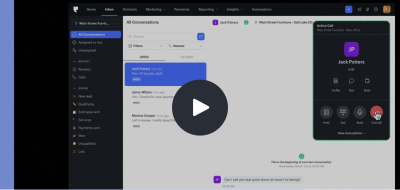
Podium Australia helps local businesses turn more calls into customers. As an AI‑powered lead conversion and communication platform, it enables teams to connect with customers faster and at scale.
Its cloud‑based VoIP system, Podium Phones, captures insights from every stage of the customer journey. Operating 24/7, it ensures no lead is missed by automatically texting every missed or after‑hours call.
When the phone rings, Podium AI instantly surfaces a complete history of past conversations, notes, and purchases—empowering staff to deliver personalised, informed service from the first hello. Customers can also switch to text, with this feature alone saving teams 20+ hours each month.
After every call, Podium AI generates a detailed recap, flags follow‑ups, and stores everything in one central inbox—making it easy to pick up right where the conversation left off.
Key Features:
- 24/7 missed call auto‑reply
- Switch‑to‑text for faster responses
- AI‑generated transcripts and summaries
- Call recording for a complete history
Built for Australia: Podium offers local support, NBN compatibility, and compliance with data privacy laws. It’s trusted by healthcare, retail, home services and the auto industry, to streamline communication, boost accountability, and drive growth.
Pros and Cons
Podium is quick to deploy and intuitive to use to deliver measurable efficiency gains through automation. While there is no free tier, the return on investment is strong thanks to the platform’s powerful features and localised support.
Best For: Small to medium-sized Australian businesses that want a smart, easy way to manage internal and external communication through a single, intelligent platform.
Explore how Podium phones can revolutionise how your business communicates.
#2 Aussie VoIP
Aussie VoIP is a cloud-hosted phone system built for Australian businesses looking for Microsoft Teams integration and reliable local numbers. The call routing is seamless, and it boasts a handful of other smart features like call recording and analytics. This tool is designed to improve team collaboration across your office and remote environments.
Key Features: The platform provides NBN-compatible services with Australian 1300 and 1800 numbers, integrated voicemail, and disaster recovery options to keep calls flowing uninterrupted. The true standout is Its Microsoft Teams integration; a feature that enables businesses to combine voice and collaboration in one single ecosystem.
Why It’s Great for Australian Businesses: Aussie VoIP operates data centres in Australia and offers 24/7 local support. For your business, that means calls meet the right national telecommunications standards and you enjoy uninterrupted service.
Pros and Cons
Aussie VoIP offers competitive pricing and excellent Microsoft Teams support. However, you might find it lacks some of the AI-powered call management features found in Podium.
Best For: Businesses heavily invested in Microsoft Teams looking to unify their communication channels with a local provider.
#3 Mynetfone
Mynetfone comes into its own when it comes to enterprise-grade VoIP services. It combines scalable multi-line support with popular productivity tools like Google Workspace and Office 365. The platform also prioritises uptime and reliability, leveraging Australia’s largest fibre network for call quality you can count on.
Key Features: Mynetfone easily integrates with your office suites, and features 24/7 monitoring alongside an Australian help desk to resolve issues quickly. It’s optimised for the NBN and supports high-volume call environments with flexible number management.
Why It’s Great for Australian Businesses: As part of Australia’s largest fibre network provider, you’ll experience strong infrastructure and localised customer support. Its business-grade security and performance suit companies looking for reliability and integration with their existing office tools.
Pros and Cons
Mynetfone is highly reliable and well-integrated, but it’s probably not the right solution if you’re looking for a more affordable option.
Best For: Medium to large businesses that require enterprise features and strong integration with cloud productivity suites.
#4 Telstra
One of Australia’s big players in telecommunications, Telstra’s VoIP offering is part of its comprehensive telecom suite. It combines voice, mobile, and internet services all under one umbrella, delivering robust call management, security features, and nationwide infrastructure support.
Key Features: Telstra provides auto-attendant services, voicemail-to-email, secure SIP trunking, and emergency call support. This is all backed by their 24/7 Australian-based customer service.
Why It’s Great for Australian Businesses: With extensive nationwide infrastructure and strict compliance standards, Telstra is a trusted provider for large enterprises and organisations with multi-location needs.
Pros and Cons
Telstra’s strength lies in its all-in-one service and trusted brand. Still, it may come with higher costs and complexity when compared to more nimble cloud-based competitors.
Best For:
Large enterprises or multi-site businesses after fully integrated telecom solutions with guaranteed reliability.
#5 Alltel
Looking for VoIP solutions that are cloud based and flexible? Alltel offers exactly that, thanks to VoIP solutions that are focused on Australian small and medium businesses. It features local numbers, IVR, and mobile SIP support to keep teams connected whilst on the go.
Key Features: The platform supports call recording, detailed reporting, and call routing designed to scale with business needs.
Why It’s Great for Australian Businesses: Alltel’s local setup assistance and Australian-based support is all about providing peace of mind. This combined with flexible pricing models make it a great fit for a range of budgets.
Pros and Cons
Alltel is affordable and easy to integrate but lacks the intuitive AI-powered tools you get with more advanced platforms.
Best For: SMEs looking for straightforward, reliable VoIP without unnecessary complexity.
#6 VoIP Cloud
VoIP Cloud is a cloud-native VoIP provider that brings CRM integration and softphone applications tailored for hybrid workforces. Its flexibility makes for quick deployment and easy management across all of your devices.
Key Features: VoIP Cloud enables multi-level call routing and integrates smoothly with popular CRM and helpdesk platforms to improve customer interactions.
Why It’s Great for Australian Businesses: VoIP Cloud complies with Australian privacy laws and offers dedicated support that’s tuned to local business needs.
Pros and Cons
Rapid deployment and strong mobile support are the key strengths here. However, it offers fewer legacy system integrations and a smaller feature set than some competitors.
Best For: Startups and small teams needing flexible cloud-based VoIP.
#7 Symbio Networks
The focus of Symbio Networks is secure enterprise VoIP. This is achieved through features like call encryption, session border controllers, and high availability; perfect if you operate in a highly regulated industry.
Key Features: The platform provides advanced call analytics, reporting, and infrastructure that’s designed for business continuity.
Why It’s Great for Australian Businesses: Symbio’s Australian-based data centres and compliance expertise make it ideal for sectors like finance, legal, and healthcare where security and privacy are paramount.
Pros and Cons
Highly secure and compliant, Symbio comes at a higher price and requires more complex implementation than simpler VoIP solutions.
Best For: Enterprises in regulated industries needing top-tier security.
#8 MaxoTel
Need something that’s more affordable? MaxoTel delivers reliable VoIP solutions at a lower price point, with international forwarding and mobile SIM bundles that support businesses that operate globally, whilst never sacrificing on local support.
Key Features: The service includes international SIP trunking, softphone apps, and competitive international call rates.
Why It’s Great for Australian Businesses: MaxoTel’s Australian support and infrastructure means you experience local reliability while facilitating global communications.
Pros and Cons
Its low-cost international calling is a standout, though mobile app features are less advanced than some competitors.
Best For: Exporters, tourism operators, and businesses with international customers.
#9 Telstra Business VoIP
Telstra’s small business VoIP plan offers hosted PBX, call reporting, and simple CRM integration to make it a solid choice for SMBs.
Key Features: The system comes complete with call forwarding, voicemail, and real-time analytics built on Telstra’s trusted network.
Why It’s Great for Australian Businesses:
Running on Telstra’s national network, it provides simple, reliable communication with local support.
Pros and Cons
Well supported and easy to use, but it lacks some advanced VoIP features and flexibility.
Best For: Small businesses wanting reliable, straightforward VoIP backed by Telstra.
#10 TPG Business VoIP
TPG’s VoIP solution offers affordable cloud PBX with emergency call support and NBN bundling, aimed at small Australian businesses.
Key Features: Cloud-based call routing, local support, and integration with TPG’s broadband services help keep costs low.
Why It’s Great for Australian Businesses: Its competitive pricing and local customer support make it a practical choice for budget-conscious SMBs on the NBN.
Pros and Cons
Cost-effective and easy to use, though it offers fewer advanced features and limited scalability.
Best For: Small businesses looking out for an affordable VoIP solution that’s integrated with their broadband.
Top VoIP Providers in Australia Compared
Provider | Best For | AI Features | NBN Optimisation | Integrations | Security Level | Ideal Business Size |
Podium | Lead conversion & customer communication | Advanced | Yes | CRM & messaging | High | SMB |
Aussie VoIP | Microsoft Teams users | Limited | Yes | Teams | High | SMB–Mid |
Mynetfone | Reliability & scale | Limited | Yes | Google/Office | High | Mid–Large |
| Telstra | Nationwide infrastructure | Basic | Yes | Telecom suite | Very High | Enterprise |
| Alltel | Simplicity & affordability | Minimal | Yes | Basic | Standard | SMB |
| VoIP Cloud | Remote teams | Limited | Yes | CRM | Standard | Small |
| Symbio | Regulated industries | Minimal | Yes | Enterprise systems | Very High | Enterprise |
MaxoTel | International calling | Minimal | Yes | Basic | Standard | Small–Mid |
Telstra Business VoIP | Simplicity | Minimal | Yes | Basic | High | Small |
| TPG | Budget option | Minimal | Yes | Limited | Standard | Small |
VoIP Security and Compliance in Australia
Because calls now travel over the internet, security becomes part of your phone system.
Privacy Act Considerations
Businesses handling customer data must store and protect communication records appropriately. This includes voicemails, recordings, and transcripts.
Call Recording Laws
Australia generally allows call recording when one party consents, but businesses should inform customers as part of normal call handling.
Data Residency
Australian-hosted systems simplify compliance and reduce latency. This matters for regulated industries.
Encryption (Simplified)
Secure VoIP systems use encrypted connections:
- TLS protects call setup
- SRTP protects the voice conversation
- Disaster Recovery
Good systems automatically reroute calls during outages and support backup connections like 4G/5G.
The Right VoIP Phone System for Your Business is Here
With VoIP reshaping how Australian businesses communicate, it’s easier than ever to find a solution that fits your team’s size, industry, and budget. From AI-powered platforms like Podium Australia to affordable NBN-optimised services like TPG, the options for 2025 are wide-ranging.
Choose the right solution, and watch as your business communication gets taken to new heights.