How to Apologise to a Customer and Write an Effective Apology Letter



Apologising to customers can be quite challenging. Knowing how to apologise effectively is crucial because it directly impacts your business reputation. Usually, customers want to feel that their complaints and concerns are taken seriously and that they receive an appropriate response. You should also apologise promptly because it shows you value your customer’s time.
In this blog post, we will provide you with a comprehensive guide on how to apologise to your valuable customers and master the art of writing an apology letter that leaves a lasting impression.
The end-to-end customer service recovery process
A good apology doesn’t happen in isolation, it’s the visible part of a broader recovery process that unfolds in a fairly predictable sequence. It starts with acknowledging the issue quickly, ideally within hours rather than days, since a delayed response often frustrates customers more than the original problem. From there, validating the customer’s emotion matters more than most businesses realise, taking a moment to recognise how the experience made them feel before jumping straight to a solution.
Once the emotional side is addressed, an internal investigation should happen to understand what actually went wrong, which then informs how the issue gets resolved, whether that’s a refund, a redo, or another fix specific to the situation. The process shouldn’t end there though. A follow-up after the resolution, checking that the customer is genuinely satisfied, is often the step that turns a recovered relationship into a retained one, since it shows the apology wasn’t just a box-ticking exercise.
Why You Should Apologise to Customers
Apologising to customers is not just a formality; it holds significant importance in maintaining a successful and reputable business. When customers encounter issues or negative experiences, a sincere apology can make all the difference.
Let’s explore why apologising to customers is crucial and the positive impact it can have on your brand.
1. Demonstrate care and empathy.
Apologising to customers shows that you genuinely care about their experience and satisfaction. It acknowledges their feelings and frustrations, letting them know that their concerns are not being dismissed. By expressing empathy, you build a human connection with your customers, making them feel valued and appreciated.
2. Build trust and credibility.
Trust is the foundation of any successful customer-business relationship. When you take responsibility for mistakes and apologise, it demonstrates transparency and honesty. Customers are more likely to trust a company that owns up to its errors and takes action to rectify them. Businesses that handle complaints well and apologise effectively often see increased customer loyalty and repeat business.
3. Enhance customer satisfaction.
A sincere apology can turn a negative customer experience into a positive one. By addressing the issue promptly and offering a solution, you have the opportunity to turn an unhappy customer into a satisfied one. Satisfied customers are more likely to share their positive experiences with others, contributing to word-of-mouth marketing and a positive brand reputation.
4. Retain customers and reduce churn.
Customer retention is critical for the long-term success of any business. When customers feel heard and valued through a genuine apology, they’re more likely to stay loyal to your brand.
On the other hand, if complaints and issues are ignored, customers may take their business elsewhere. Customers who have a complaint resolved to their satisfaction are more likely to remain loyal and become advocates for the brand.
5. Drive continuous improvement.
Apologising to customers provides valuable feedback about areas where your business may be falling short. By acknowledging mistakes, you open the door for improvement and growth. Learning from these experiences can help you identify patterns, rectify underlying issues, and enhance your products or services.
Apologising to customers is not just an act of courtesy; it is a strategic business practice with tangible benefits. It showcases your commitment to customer satisfaction, fosters trust and loyalty, and creates opportunities for continuous improvement.
When and how to apologise across different channels
The right channel for an apology depends on how serious the issue is and how the customer originally raised it. SMS apologies work well for fast, transactional problems, like a delayed delivery or a scheduling mix-up, where a quick, direct message resolves things without needing a lengthy explanation. Email suits more formal situations, particularly where a detailed resolution needs to be laid out in writing, such as a billing error or a multi-step fix that the customer will want to reference later.
Phone calls are worth reserving for higher emotional impact cases, where a customer is genuinely upset or the issue has been ongoing, since hearing a real person acknowledge the problem carries more weight than any written message can. Public review responses sit in a category of their own, functioning less as a direct apology to one customer and more as a signal to everyone else reading, so tone matters just as much as content: calm, specific, and free of defensiveness, even when the original review feels unfair.
How to Apologise to a Customer: 10 Tips
1. Take responsibility.
Begin by acknowledging the issue and taking ownership of any mistakes or shortcomings. Avoid deflecting blame or making excuses. Customers appreciate honesty, and admitting fault shows that you value their experience.
2. Understand your customer.
Empathy is key to effective apologies. Put yourself in your customer’s shoes and try to understand their perspective. Listen actively to their concerns, and show genuine concern for their feelings.
3. Offer context to explain the problem.
Providing context can help the customer understand why the issue occurred. Transparently share any relevant information about the situation, ensuring the customer knows that you are being open and honest.
4. Offer solutions and alternatives.
Present viable solutions to address the problem. Whether it’s a refund, replacement, or additional support, show that you are committed to resolving the issue to their satisfaction. Offering alternatives demonstrates your dedication to finding the best resolution.
5. Set expectations.
Be clear about the steps you’ll take to resolve the issue and the timeframe in which it will be addressed. Setting expectations helps manage the customer’s anticipation and shows you are proactive in resolving the matter.
6. Follow up.
After offering a solution, follow up with the customer to ensure their satisfaction. This gesture reinforces your commitment to their experience and allows them to provide further feedback.
7. Explain what you’ll improve.
Take the opportunity to highlight the changes or improvements you’ll make to prevent similar issues in the future. Customers appreciate knowing that their feedback has been taken seriously and acted upon.
8. Thank the customer for the feedback.
Express gratitude for the customer’s feedback. Customer complaints can be seen as opportunities for growth and improvement, and thanking them for their input shows that you value their opinion.
9. Apologise via text or phone.
Choose the appropriate medium for apologising based on the nature of the issue and the customer’s preference. Text messages allow for quick responses, while phone calls offer a more personal touch.
10. Utilise Podium Phones for better context.
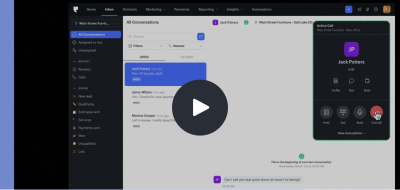
With Podium’s phone services, you can track all past interactions with the customer, providing valuable context for the apology. With Podium’s Phones, you can also utilise the call summaries feature which is AI-generated summaries of your phone calls. Having access to previous conversations helps you understand the customer’s history with your business and tailor your apology accordingly. This allows for a more personalised and empathetic approach, reinforcing your commitment to their satisfaction.
Remember, a sincere and well-crafted apology can turn a negative experience into a positive one and strengthen your customer relationships. Use these tips to navigate the apology process effectively and showcase your dedication to exceptional customer service.
Spotting the emotional stages of an unhappy customer
Unhappy customers tend to move through a fairly consistent emotional arc, and recognising where someone sits in it changes how an apology should be worded. It typically starts with frustration, often before they’ve even contacted you, which can escalate to genuine anger if the issue isn’t addressed quickly. Left unresolved for too long, anger tends to curdle into distrust, where the customer starts to question whether the business cares at all, and this is usually the hardest stage to recover from.
The right response meets people where they are rather than rushing past it. Early on, a fast, simple acknowledgement is often enough to defuse frustration before it escalates. Once distrust has set in, language needs to be more specific and less generic, showing exactly what went wrong and what’s being done about it, since vague reassurances tend to backfire at this stage. Done well, this moves the customer toward relief, and with consistent follow-through, back to genuine loyalty.
How NOT to apologise to customers: 4 mistakes to avoid
1. Avoid making empty promises.
When apologising to customers, refrain from making promises you cannot keep. Customers expect genuine solutions and actions, not empty assurances. Overpromising and underdelivering will only lead to further disappointment and damage your credibility.
2. Don’t defend yourself.
Resist the urge to become defensive when faced with a customer complaint. Even if you believe the issue wasn’t entirely your fault, arguing with the customer will only escalate the situation. Instead, focus on understanding their perspective and finding a resolution.
3. Avoid being confrontational.
Maintain a calm and professional demeanour when addressing customer concerns. Getting confrontational or aggressive will only alienate the customer and create a negative impression of your brand. Show empathy and a willingness to listen to their grievances.
4. Don’t blame the customer.
Never blame the customer for the problem, even if it appears that they might have contributed to the issue. Shifting blame onto the customer will make them feel undervalued and disrespected. Instead, take responsibility and work towards a resolution together.
Remember, a genuine and empathetic approach to addressing customer issues can turn a negative experience into a positive one. By avoiding these common mistakes, you demonstrate your commitment to exceptional customer service and foster stronger customer relationships.
Internal SOP: How teams should handle complaints
Behind every good customer apology is usually a clear internal process that determines who handles what and how quickly. Front-line staff, whether that’s a receptionist, a technician, or a support rep, are typically the first point of contact and should be equipped to acknowledge a complaint immediately, even if they can’t resolve it on the spot. Escalation rules then determine when an issue needs to move up to a manager or specialist, usually based on the severity of the complaint or whether a customer has already been unsatisfied with an initial response.
Response time targets keep the whole process accountable, with most businesses aiming to acknowledge a complaint within a few hours and provide a resolution plan within a day or two, depending on complexity. Approval rules for refunds or credits are worth setting in advance too, giving front-line staff authority to resolve smaller issues on the spot rather than making a frustrated customer wait for manager sign-off on something minor.
How to Write an Apology Letter to a Customer: A Step-by-Step Guide
Writing a sincere and effective apology letter to a customer can help mend a strained relationship and demonstrate your commitment to excellent customer service. Follow these steps to craft an apology letter that resonates with your customer and leaves a positive impression:
1. Be specific about your mistakes.
Start your apology letter by clearly and honestly addressing the specific mistakes or issues that occurred. Avoid generalisations and provide precise details to show the customer that you understand the situation and are taking responsibility for the errors.
2. Personalise your letter.
Address the customer by their name to add a personal touch. Acknowledge that you are writing directly to them, and not using a generic template. Personalisation demonstrates that you value their business and are genuinely concerned about their experience.
3. Acknowledge the situation.
Show empathy toward the customer’s feelings and frustrations. Acknowledge the impact that the issue has had on them and let them know that you understand their concerns. This step helps to build a connection with the customer and validates their emotions.
4. Be genuine.
A sincere apology is key to winning back customer trust. Express genuine remorse for the inconvenience or negative experience they have faced. Avoid using insincere language that might come across as robotic or scripted.
5. Respond in a timely manner.
Promptness is crucial when writing an apology letter. Respond to the customer’s complaint or concern as soon as possible. A timely response shows that you take their feedback seriously and prioritise their satisfaction.
6. Offer a solution.
Propose a clear and actionable solution to address the customer’s issue. Whether it’s a refund, replacement, or additional support, let the customer know you are committed to making things right. Be specific about the steps you’ll take to resolve the problem.
7. Express your commitment to improvement.
Conclude the letter by expressing your dedication to improving your products or services. Let the customer know that their feedback is valuable and will be used to prevent similar issues in the future. This reassures the customer that their experience will be better moving forward.
Remember, an effective apology letter can turn a dissatisfied customer into a loyal advocate for your brand. Following this step-by-step guide and infusing your letter with genuine concern demonstrates your commitment to providing exceptional customer service and maintaining strong customer relationships.
Customer Apology Letter Examples
Here are some examples of customer apology letters to use:
1. Apology for Incorrect Product Shipment
Subject: Apology for the Incorrect Shipment
Dear [Customer Name],
I want to sincerely apologise for the mix-up that resulted in you receiving the wrong product in your recent order. I take full responsibility for this error, and I understand how frustrating and inconvenient it must be for you.
Please know that we are working diligently to rectify the situation. We have already initiated the process to send you the correct item, which should reach you within [timeframe]. In addition, I have personally reviewed our shipping procedures to prevent similar mistakes in the future.
Once again, I apologise for any inconvenience this has caused you. Your satisfaction is our top priority, and we are committed to ensuring a seamless shopping experience for you.
If you have any further questions or concerns, please don’t hesitate to contact our customer support team at [contact information]. Thank you for your understanding, and we look forward to making it right for you.
Sincerely,
[Your Name]
2. Apology for Delayed Service
Subject: Apology for the Delay in Service
Dear [Customer Name],
I want to extend my sincerest apologies for the unexpected delay in providing the service you requested. I understand that time is of the essence, and our failure to meet the deadline was a letdown for you.
Please know that we are taking immediate action to resolve the delay and prioritise your service request. We have allocated additional resources and manpower to ensure swift completion. Rest assured that we are committed to delivering the highest level of service for you.
Your patience and understanding are greatly appreciated. We value your business and strive to exceed your expectations in the future.
If there is anything else you would like to discuss or any questions you may have, please don’t hesitate to contact me directly at [contact information]. Thank you for allowing us to make it right for you.
Best regards,
[Your Name]
3. Apology for Customer Service Experience
Subject: Apology for Your Recent Customer Service Experience
Dear [Customer Name],
I am writing to express my sincere apologies for the subpar customer service experience you encountered during your recent visit to our store. Please know that your feedback is crucial to us, and we take your concerns very seriously.
I understand how crucial excellent customer service is to your satisfaction, and we failed to meet that standard on this occasion. We are actively reviewing the situation and retraining our staff to ensure this doesn’t happen again.
To make it up to you, we would like to offer you a [discount, voucher, or free service] on your next purchase with us. We genuinely value your business and would be honoured to have another opportunity to serve you better.
If you have any further questions or require additional assistance, please feel free to reach out to me directly at [contact information]. Your satisfaction is our priority, and we are committed to regaining your trust.
Thank you for bringing this matter to our attention, and we look forward to making amends.
Warm regards,
[Your Name]
4. Apology for Billing Error
Subject: Apology for Billing Error and Overcharge
Dear [Customer Name],
I am writing to apologise for the billing error that resulted in an overcharge on your recent invoice. I deeply regret any inconvenience or frustration this may have caused you.
Upon identifying the mistake, we have already processed a refund for the overcharged amount, which should reflect in your account within [timeframe]. Additionally, we have implemented new measures to prevent similar billing errors in the future.
Please know that we take billing accuracy very seriously, and we value your trust in our company. Should you have any further questions or need any additional assistance, please don’t hesitate to contact our billing department at [contact information].
We appreciate your understanding and patience during this process. Your satisfaction is of utmost importance to us, and we will strive to provide you with a flawless experience moving forward.
Thank you for your continued support.
Sincerely,
[Your Name]
Note: These apology letter examples are intended as templates and can be customised to suit your specific situation. Always ensure that the content of your letter is personalised and genuine to resonate with the recipient.
Measuring apology success and recovering customers
An apology isn’t just a moment in a conversation, it’s something you can and should measure over time. Complaint resolution time is the most straightforward metric, tracking how long it takes from the initial complaint to a resolution the customer accepts. Retention after issue takes this further, looking at whether customers who had a problem and were apologised to stick around at similar rates to those who never had an issue at all, which is often the clearest sign of whether your recovery process is actually working.
Sentiment tracking, whether through follow-up surveys or monitoring how customers describe their experience afterwards, adds another layer of insight, while review recovery rates specifically measure how often a negative review gets updated or a customer leaves a positive follow-up after their issue was resolved. Repeat purchase behaviour is the ultimate test: customers who come back and spend again after a well-handled complaint are proof that the apology did more than just smooth things over in the moment.
The delicate subject of public apologies
When a complaint plays out publicly, whether on a Google review or social media, the apology is doing double duty: addressing the customer directly while also being read by everyone else considering your business. Google review responses carry particular weight here, since prospective customers often read how a business handles criticism before deciding to trust it, and a thoughtful, specific response to a negative review can do more for your reputation than a page of five-star reviews with no engagement at all.
Social media complaints move faster and are more visible, so response time matters even more than it does on review platforms, with a public acknowledgement often needed before a private resolution can even begin. There’s also a practical SEO angle worth knowing: businesses that actively respond to reviews tend to build stronger trust signals and local visibility over time, since search engines and customers alike read consistent, professional responses as a sign of a business that’s actually paying attention.
Manage and Improve Your Reputation
In the fast-paced digital world, your online reputation can make or break your business. That’s where Podium steps in as the ultimate solution to not only manage but also improve your online reputation and enhance customer communication.
Proactively managing and improving your reputation is crucial to gaining customer trust, attracting new business, and staying ahead of the competition. With Podium’s comprehensive reputation management platform, you can take control of your online image, build strong customer relationships, and watch your business thrive.