How To Run an Auto Repair Shop: 15 Professional Strategies



Running an automotive repair shop is one thing. Running a successful auto repair shop is an entirely different story. Whether you are just starting an auto repair shop or have been in the business for years, you need to know how to manage the shop effectively to thrive in the auto repair business.
Management is more than learning how to run an auto repair shop or how to run a mechanic shop. It requires specific strategies and skills unique to the automotive repair industry.
A Clear Framework for the 15 Professional Strategies
This guide outlines 15 professional strategies for running a successful auto repair shop. Each strategy is designed to solve a specific operational challenge and deliver a measurable outcome, whether that is improved efficiency, higher profitability, safer working conditions, or stronger customer retention.
Rather than viewing shop management as one broad skill, these strategies are best approached as a system. Some focus on financial control, others on operations, people management, customer experience, and long-term growth. When applied together, they create a more predictable, scalable, and resilient auto repair business.
The strategies are grouped across five core areas: Operations and workflow, financial performance, staff and safety, customer experience, and marketing and growth. This structure helps shop owners prioritise improvements based on their current challenges, rather than trying to fix everything at once.
Significance of Effective Auto Repair Shop Management
The significance of effective management in an auto repair workshop cannot be understated. Auto workshops exist to service and repair cars and other vehicles. Good management ensures that these repairs and services are done on time, using high-quality parts. More importantly, good management ensures that all repairs and services are done correctly and according to the relevant regulations. This ensures the safety of car owners when they drive away from the auto shop.
Additionally, auto repair shop management includes overseeing and enforcing health and safety. This helps protect workers from injury and even death while on the job.
Effective management also extends to production and quality control. It helps reduce wastage and increases performance. A good manager oversees every department of an auto workshop to ensure that all activities run smoothly and that staff use the right processes and procedures.
Reflecting On Existing Auto Repair Shop Management
You may already have an established auto repair shop but find it challenging to grow your business. If this is the case, you must identify areas for improvement.
For instance, if you get a lot of complaints or negative reviews from customers, you need to overhaul your processes. If you do not attract enough new customers, you should revamp your image or build an online presence. If you have a high rate of injuries on the job, you should rethink your health and safety measures.
Sometimes, the smallest change or upgrade is the push an auto repair business needs to change things around.
Are Auto Repair Shops Profitable?
Now that you know how to run a successful auto repair shop, you are probably wondering how profitable the industry is. If you are starting your auto workshop from scratch, there are several aspects you must keep in mind if you want to see good profits:
Pricing Strategies for Profitability
Consider charging flat fees or hourly rates depending on the services your workshop offers. Generally speaking, you should charge a set price for routine tasks like oil changes and fixing flat tires. For more complicated repairs, you can charge an hourly rate based on the cost of labor and parts. You could even offer a set price for a basic auto service and increase this price annually.
Apply your price strategies to every service and product you offer. For example, you can apply labor and part costs to wheel alignment and balancing. You can charge per part for engine tune-ups and per hour for auto body repair.
Keep in mind that price will affect customer demand and sales volume. So, if you charge higher prices, you will enjoy increased profits, but your sales volume will decline. If you charge lower prices, you will see more sales, but your profit will not be quite as large.
Cost Control Measures
Another way to increase profitability is to implement cost control measures. Cut unnecessary expenses, use flat rates wherever possible, and take advantage of free advertising. If you have not done so yet, switch to automatic electronic billing to reduce printing costs.
Furthermore, consider how much money you used to start your business and how much you need to pay back. This also forms part of financial planning and budgeting in your workshop.
Financial Planning and Budgeting
Learning how to manage an auto repair shop includes learning how to plan and budget your finances. Create a financial plan that gives you an overview of your operating costs and investments. This will allow you to set an expected profit and keep track of your cash flow. This overview will also give you some ideas on expanding your shop without getting into more debt.
Operational Optimisation Strategies for Auto Repair Shops
Effective auto repair shop management also means optimising specific areas of your business. This is especially important if you have a start-up because it will allow you to place all your tools and equipment out of the way of customers and where workers can use them most efficiently.
How Do I Organise My Auto Repair Shop?
Plan the layout of your shop by marking off the space needed for offices, loading and unloading docks, and the area where customers drive in. Plan for a spacious waiting room, typically next to the front desk area. If you want to expand to service larger vehicles, you should create the space for them now. Otherwise, you will end up limiting the growth of your business.
At the same time, ensure that you have enough parking space outside when all the inside bays are full. Reserve several bays for electric vehicles to speed up the flow between each service and repair.
Inventory Management
You can also optimise your inventory by implementing an inventory system. Inventory software systems can help you oversee and control every item used for repairs and services. It will allow you to purchase the stock you need when you need it, meaning you won’t sit with unused stock for months. Focus on always having stock of the most in-demand items so you never have to turn a customer away.
Inventory management directly affects profitability and downtime, yet it is often overlooked. Poor inventory control ties up cash in slow-moving parts while increasing delays when fast-moving components are unavailable.
The most successful workshops prioritise availability of high-demand parts rather than bulk stock. Fast-moving items keep bays productive and customers satisfied. Over-ordering rarely used parts increases storage costs and risks obsolescence, particularly as vehicle technology changes.
Effective inventory management balances availability with cash flow. It ensures technicians are not waiting on parts and customers are not waiting on repairs, while keeping working capital flexible.
Implementing Technology for Efficiency
You can also use technology to help you design or overhaul your shop’s interior. Doing this will help you streamline the layout and plan for future changes. Other technologies that will help you improve efficiency in your auto workshop include an online customer portal where customers can book services and repairs. They should also be able to get quotes from this portal or ask to speak to a technician.
You can look into digital vehicle inspections and workflow management to ensure that vehicles are thoroughly inspected and all faults detected. This saves time while teaching your technicians new skills.
Technology as an Operational Advantage, Not a Nice-to-Have
Technology now sits at the centre of modern repair operations because it directly affects speed, visibility, and communication. Efficient booking systems reduce idle bays and prevent overbooking. Workflow visibility lets managers see which jobs are waiting on parts, approvals, or technician availability so issues are fixed early rather than at the end of the day.
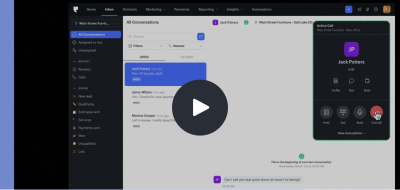
Communication tools are just as important. Many workshops use systems like Podium Phones to manage incoming calls and customer conversations. Calls can be handled, recorded, or converted into text conversations so staff can respond quickly even when they are on the workshop floor. Service teams often save significant time because missed calls automatically receive a response and enquiries are captured instead of lost.
From the customer’s perspective, this improves clarity. Digital updates, approval requests, and quick replies reduce disputes and shorten decision times. When customers understand what is happening with their vehicle and why, trust increases and delays decrease.
The aim of adopting technology is not complexity. It is fewer misunderstandings, faster approvals, and a smoother experience for both staff and customers.
Measuring Your Success: Operational Benchmarks That Matter
Optimisation only works when performance is measured. Auto repair shops that improve consistently tend to track a small set of operational metrics that reveal where friction, waste, or lost revenue occurs.
Key benchmarks to monitor include average repair turnaround time, which directly impacts bay utilisation and customer satisfaction. Labour utilisation rate helps identify whether technicians are being scheduled effectively or spending too much time waiting for approvals or parts. Comeback repair rates highlight quality control issues and training gaps, while customer retention and repeat booking rates indicate whether trust and service experience are strong enough to bring people back.
These metrics do not need to be complex. Even basic tracking creates visibility, accountability, and clearer decision-making across the business.
Staff Management In an Auto Repair Shop
Running your auto repair shop like a pro also requires excellent staff management.
Recruiting and Training Skilled Technicians
Only recruit skilled technicians. Any technician on your team must have the relevant qualifications to ensure high-quality services and repairs. Allow your technicians to upskill themselves by offering ongoing training, especially when new technologies arise.
Communication and Team Collaboration
Open communication lines and team collaboration will help you reduce employee turnover. A high turnover rate is hard on the pocket because it means less productivity, increased training costs, and even a downturn in customer satisfaction.
Employee Motivation and Retention
You can improve employee retention by creating a positive and rewarding environment. You should offer decent salaries and benefits if possible. Also, there should be room for growth. This will motivate your employees to stay, which will have a long-term impact on customer service.
Modern Customer Service Expectations in Auto Repair
Customer service in auto repair has evolved beyond friendliness and trust. Today’s customers expect visibility, clarity, and control throughout the repair process.
Digital updates, visual proof of issues, and clear approval steps are now baseline expectations. Customers want to see what is wrong, understand their options, and approve work without feeling pressured or confused. Transparency is no longer just good practice. It is a competitive differentiator.
Workshops that communicate proactively and clearly reduce complaints, increase approval rates, and strengthen long-term loyalty.
How To Excel In Customer Service As An Auto Repair Shop
Customer service is integral for any auto repair shop. People love their cars and want the reassurance that your auto shop will fix any fault or defect they may have. They also want to deal with auto shops that are transparent and honest and give them more than one option when it comes to pricing.
Building Trust and Credibility
You want your customers to know that you run a credible business and that they can trust you and your technicians. Simplify your quotes and detail all the applicable costs. Explain why you charge the amounts you do. Show your customers the components that will go into their vehicles and detail the costs of each.
Effective Communication with Clients
Trust and credibility also extend to communication. Let the customer know if there is a hiccup with a service or repair or if you are waiting for a specific part. Give them an accurate estimate of how long a repair or service will take while considering potential delays. Provide your customers with more than one platform to contact you so they can get the information they need when they need it.
Implementing Customer Feedback Mechanisms
Listen to what your customers say. Monitor reviews and take opinions and advice to heart. Reach out to angry customers to resolve complaints immediately. And report back to customers on how you have implemented their feedback.
Australian Context for Auto Repair Shop Management
Effective auto repair shop management in Australia carries additional expectations beyond day-to-day operations. Workshop owners must operate within clear standards around workplace safety, consumer protection, and pricing transparency, all of which directly influence trust and long-term viability.
Australian customers increasingly expect clear, itemised quotes, upfront approvals for additional work, and honest communication if timelines change. From a compliance perspective, workshops are also responsible for maintaining safe working environments under Australian workplace health and safety obligations, as well as ensuring technicians are appropriately qualified for the work they perform.
While this article does not provide legal advice, it is important to recognise that strong management is not only about profitability. It is also about meeting regulatory expectations, protecting staff, and maintaining a reputation that stands up in a highly competitive local market.
Marketing and Branding of an Auto Repair Shop
When all is said and done, you cannot implement these strategies if people do not know your auto repair shop exists. Your shop must have a recognisable brand attached to it, and you must market your services and products on platforms where your target audience is already active. Marketing and advertising is about much more than asking, “How do I advertise myself as a mechanic?”
Online Presence and Digital Marketing
Create a local online presence before thinking about doing digital marketing. Establish a social media profile on well-known platforms like Facebook and Instagram. Consider creating a business profile on LinkedIn. Using these platforms, you can advertise locally and attract a loyal customer base. Use digital marketing strategies to create brand awareness and run targeted adverts to reach your target demographics.
An online presence is only effective if it supports local discovery. For auto repair shops, visibility in local search results is critical, as most customers search based on proximity and urgency.
Consistent business information across online listings, active review management, and clear service descriptions all contribute to stronger local visibility. Reviews are particularly influential. They shape trust before a customer ever contacts the workshop and often determine whether a shop is shortlisted at all.
Local SEO and reputation management are not marketing extras. They are foundational to sustained demand in a local service business.
Customer Engagement Strategies
Engage your customers by offering free information and even free consultations or diagnostics. When customers are ready to purchase, provide clear solutions and cost estimates. Allow them to buy and pay online using a range of payment methods. After a purchase, reward your customers using loyalty programs. Gather feedback to address concerns or complaints and stay active on social media platforms. You must stay engaged with your customers to build trust and loyalty.
Common Mistakes That Hold Auto Repair Shops Back
Many auto repair shops struggle not because of lack of skill, but because of avoidable operational mistakes. Common issues include inconsistent pricing that erodes trust, poor communication that leads to disputes, and underinvestment in staff development that increases turnover.
Other pitfalls include relying too heavily on word-of-mouth without building an online presence, neglecting inventory discipline, and failing to track basic performance metrics. Over time, these issues compound and make growth far harder than it needs to be.
Recognising and addressing these risks early creates a more stable and scalable business.
Building a Strong Brand Image
Your auto repair shop’s brand image is directly related to its success. You must visualise your business’s values and mission. Offer a unique selling proposition and use online platforms to promote it. You should also set up a dedicated website and print other marketing materials like flyers for an extended reach. You can even consider buying ad space on a local billboard if your budget allows it.
A strong brand image and reputation for being trustworthy and honest will help you run your auto shop like a pro. The rest will come naturally, as you carry on with business every day.